Camp kitchen zones and the two bin system: storage, prep, cooking, washing
Published 2026-11-22.
A camp kitchen that works is a layout, not a pile of gear. Set it up in four zones, food storage, preparation, cooking, and washing, arranged so food moves in one direction from storage toward the stove and cooked food never travels back across a surface that held raw ingredients. That single rule prevents most camp kitchen failures, from cross contamination to the nightly hunt for a clean plate, and it costs nothing but the order in which two bins get unpacked.
Pack at home the way camp will run
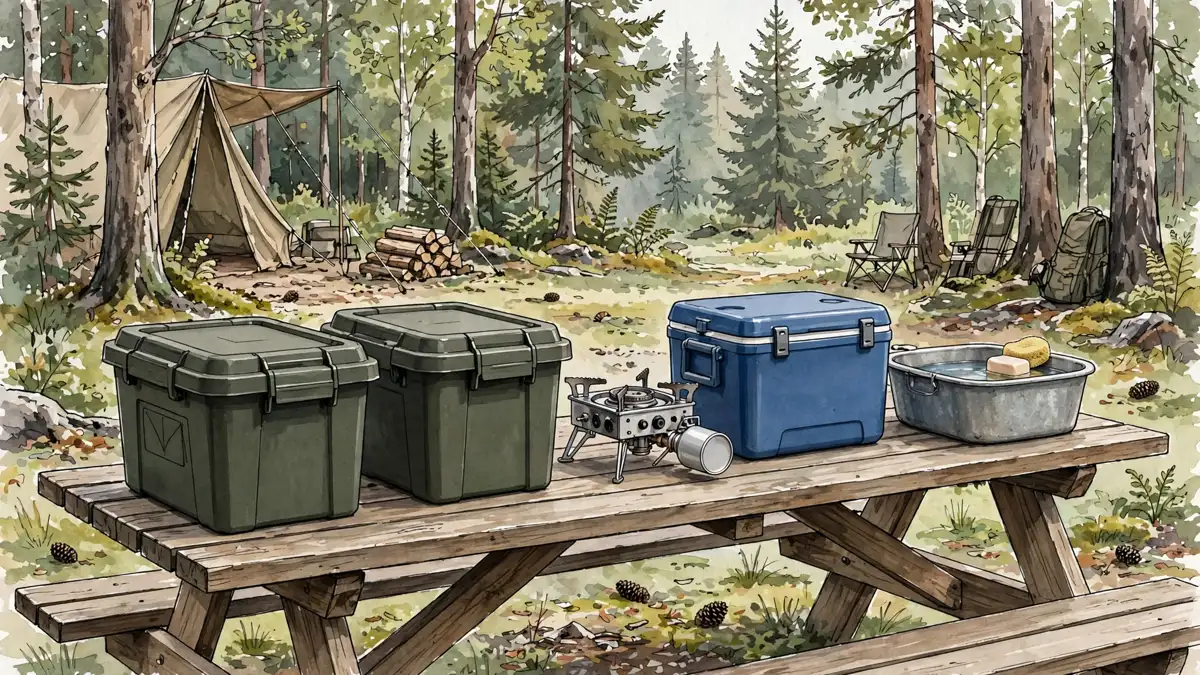
The two bin system is the packing half of the zones. Bin one is the kitchen bin: stove and fuel, pots, utensils, knife with a cover, cutting board, washing soap, sponge, and towels. Bin two is the food system: sealed, labelled dry food containers grouped by meal, plus the small containers for ingredients used at nearly every meal. The cooler travels separately and is packed last and opened first at camp. Grouping each meal's dry ingredients together is the unglamorous step that saves the most time outdoors, because nobody unpacks the whole food bin to find one spice jar.
| Container | Carries | Becomes at camp |
|---|---|---|
| Kitchen bin | Stove, fuel, cookware, utensils, board, knife, wash kit | Cooking zone plus washing zone |
| Food bin | Sealed dry food grouped by meal, seasonings | Storage zone, dry half |
| Cooler | Perishables, raw meat sealed and low, ice | Storage zone, cold half |
| Loose kit | Water container, trash bags, handwash setup | Water point plus waste point |
Scope, stated plainly: coolers, wash basins, tables, and multi tote systems are mainly for vehicle supported camping. A backpacking kitchen scales the same zones down to a stove or a no cook menu, one vessel, water treatment, and the food storage method the destination requires. The zones survive the scaling; the bins do not, and pretending otherwise is how checklist articles mislead walkers.
The setup procedure
- Read the site before unpacking food. Find the potable water tap, any food locker, the fire ring, trash or pack out rules, and restrooms. Success looks like: food still sealed while every destination for it is already known.
- Establish storage first. Place the cooler in shade, with a thermometer inside, and set the food bin beside it, off the ground where the site allows. Success looks like: cold food at 40F, which is 4C, or below, raw meat sealed in leak resistant containers low in the cooler and apart from ready to eat food.
- Lay out prep between storage and stove. Clean board, covered knife, and ingredients only; dirty dishes never land here. Success looks like: a surface where ready to eat food can be handled without sharing space with raw packaging.
- Set the stove beyond prep, on a stable surface. Fuel burning appliances stay outdoors, away from tent walls and dry vegetation, with a clear walking route around them. Success looks like: the stove cannot be knocked by someone passing with a plate.
- Place washing and waste at the far end. Handwash water, dish basins, a strainer for food scraps, and closed trash, away from the drinking water outlet. Success looks like: dirty cookware travels from serving to washing without crossing the prep surface.
- Store scented items by the local rule, every night. Food, grease, trash, cookware, and scented toiletries go into the provided locker, a hard sided vehicle, or a certified bear resistant container, exactly as the site requires. Success looks like: nothing scented sleeps in a tent, ever.
Food safety numbers that travel
Three figures carry most of the risk. Cold food stays at or below 4C, checked with the cooler thermometer rather than guessed from the ice. Hand hygiene uses soap and water as the standard, with hand sanitiser of at least 60 percent alcohol as the documented backup in outdoor food safety guidance. Raw and ready to eat foods stay separated by container, board, and the one way workflow, in that order of reliability. None of these numbers requires equipment beyond a thermometer and discipline, which is precisely why they get skipped on the trips that end with a story nobody wanted.
Strike and the drive home
Pack in reverse zone order: wash and dry everything, then the kitchen bin, then the food bin with leftovers sealed and labelled, cooler last into the vehicle. Strain wash water and capture food scraps rather than broadcasting them around the site. At home, the bins are the unpacking system too: food bin to the pantry shelf, kitchen bin washed, dried, and repacked with fuel and soap replaced while the gaps are still remembered. What success looks like: the next trip starts by lifting two bins and a cooler, not by rebuilding a kitchen from cupboards, and the first meal at camp is cooked in a layout that was decided at home, calmly, instead of improvised hungry at dusk.
, Sofia Marino, Travel Writer